DIY vs Pro Garage Clear-Out: When to Call Specialists
A garage clear-out looks simple from the outside: pull everything out, sort the clutter, load the car, and reclaim the floor. In practice, it can turn into a half-finished weekend, a sore back, and a pile of items that still need the right disposal route. That is where the real decision begins: should you handle it yourself, or call in specialists for a garage clearance?
This guide breaks down DIY vs pro garage clear-out choices in a practical, no-nonsense way. You will learn when a do-it-yourself approach makes sense, when specialist help is the smarter move, what risks people often overlook, and how to plan the job properly so it does not swallow your entire weekend.
If you are trying to decide whether to roll up your sleeves or book a professional team, you are in the right place.
Table of Contents
- Why DIY vs Pro Garage Clear-Out: When to Call Specialists Matters
- How DIY vs Pro Garage Clear-Out: When to Call Specialists Works
- Key Benefits and Practical Advantages
- Who This Is For and When It Makes Sense
- Step-by-Step Guidance
- Expert Tips for Better Results
- Common Mistakes to Avoid
- Tools, Resources and Recommendations
- Law, Compliance, Standards, or Best Practice
- Options, Methods, or Comparison Table
- Case Study or Real-World Example
- Practical Checklist
- Conclusion
- Frequently Asked Questions
Why DIY vs Pro Garage Clear-Out: When to Call Specialists Matters
A garage is rarely just a place for the car. It becomes a storage buffer for tools, broken furniture, forgotten sports gear, paint tins, holiday decorations, old appliances, and the box that you keep meaning to sort "next month". Before long, the space stops being useful and starts becoming a problem.
That is why the DIY versus professional decision matters. It is not only about time. It is about safety, disposal responsibility, physical effort, and whether you can realistically finish the job without creating a bigger mess.
For a small, tidy garage with a manageable amount of general household clutter, doing it yourself can be efficient and satisfying. But garages often hold awkward or heavy items, mixed waste, sharp tools, electrical equipment, old paint, and items that may need special handling. The moment the job stops being a simple tidy-up, professional help starts to make more sense.
Truth be told, a garage clear-out is one of those jobs that looks easier before the first dust sheet comes out. Once you open every box, you discover the real scale of it.
Getting the decision right matters because a poor clearance can lead to:
- injury from lifting or moving bulky items
- damage to walls, floors, doors, or vehicles
- incorrect disposal of waste or recycling
- unfinished sorting that drags on for weeks
- stress when you need the space back quickly
If you are also refreshing the rest of your home, a garage clear-out often sits alongside wider property upkeep. For related ideas on home care and cleaning priorities, you may find the service overview and domestic cleaning support in W10 useful as part of a broader maintenance plan.
How DIY vs Pro Garage Clear-Out: When to Call Specialists Works
The basic process is the same whichever route you choose: assess the contents, sort items, remove waste, clean the space, and decide what stays. The difference is how much of that process you handle yourself and how much responsibility you hand over to a specialist team.
DIY garage clear-out
A DIY garage clear-out usually means you are doing everything: sorting, lifting, bagging, loading, transporting, and disposing of items through local recycling options, council collection schemes, donation routes, or the tip. It works best when the volume is low, the items are lightweight, and you already know where everything should go.
Typical DIY tasks include:
- emptying shelves and corners
- separating keep, donate, recycle, and dispose piles
- breaking down packaging or cardboard
- transporting usable items to donation or collection points
- taking general waste to an approved facility
Professional garage clearance
With a professional clearance, specialists handle the hard part: lifting, loading, sorting where appropriate, and removing the waste efficiently. Depending on the provider, they may also advise on recycling, bulky items, and special waste streams. A good service is especially useful when the garage contains large, heavy, or mixed items that would otherwise mean multiple trips and a lot of manual labour.
For instance, if the garage includes old furniture, white goods, broken shelving, or other bulky items, a specialist route can be far more practical. Services such as garage clearance, bulky waste collection, large item collection, and furniture disposal are built for exactly this kind of job.
The best way to think about it is simple: DIY gives you control, while specialists give you speed, muscle, and a more streamlined disposal route.
Key Benefits and Practical Advantages
Each route has strengths, and the right choice depends on what you value most: control, cost, speed, or convenience.
| Factor | DIY garage clear-out | Professional specialist clear-out |
|---|---|---|
| Cost | Usually lower if you already have transport and time | Higher upfront, but often saves labour and repeat trips |
| Time | Can take a full weekend or more | Often completed much faster |
| Physical effort | High | Low for the homeowner |
| Disposal handling | You manage sorting and drop-offs | Usually handled for you |
| Safety | Depends on your experience and equipment | Improved through trained handling and process |
| Best for | Small, straightforward clear-outs | Large, heavy, awkward, or time-sensitive jobs |
DIY benefits are obvious. You save on labour, decide the pace, and can go through every box at your own speed. That works well if you want to reclaim tools, reorganise hobbies, or sort stored household items without rushing.
Professional clearance has its own advantages. It removes the friction. You do not have to hire a van, drag heavy items through a narrow side passage, or work out what to do with a fridge, mattress, or mixed waste. If your goal is to get usable space back quickly, that simplicity has real value.
There is also the less obvious advantage of momentum. Once specialists start, the job tends to finish. That alone can save a project from drifting into "garage purgatory" for another six months.
Who This Is For and When It Makes Sense
Not every garage clear-out needs specialists. But some situations strongly point in that direction.
DIY makes sense when:
- the garage mainly contains light, ordinary items
- you already have enough time over a weekend
- you have a suitable vehicle and help available
- the contents are easy to sort
- there are no suspected hazardous materials
Calling specialists makes more sense when:
- you need the garage cleared fast for a move, sale, or renovation
- the space contains heavy or bulky items
- you are dealing with accumulated waste from years of storage
- access is awkward, such as a steep drive, narrow path, or tight parking
- you are not comfortable lifting or carrying large objects
- you suspect the garage contains items requiring careful disposal
Homeowners are not the only people who benefit from a specialist garage clear-out. Landlords, property managers, tradespeople, and business owners all face situations where a fast and orderly clearance saves time and reduces disruption. If you are dealing with wider property turnover, you might also look at flat clearance or house clearance as adjacent services.
In commercial or mixed-use settings, the right choice is often about continuity. A cluttered garage or storage area can slow down repairs, block access, and create avoidable risk for anyone working on-site.
Step-by-Step Guidance
If you want to make the right decision and avoid the usual chaos, use a structured approach.
- Survey the garage properly. Do not judge by the surface layer alone. Look behind shelving, under tarps, and around corners.
- Identify item categories. Split contents into keep, donate, recycle, dispose, and specialist-handling items.
- Check the heaviest and most awkward pieces first. These are usually what make DIY jobs drag on.
- Assess access. Can items be moved out safely? Is there room to manoeuvre, or will you need help and equipment?
- Estimate the disposal burden. If it means repeated trips, parking hassle, or multiple waste streams, a specialist may be worth it.
- Decide on the route. Choose DIY if the job is small and manageable; choose specialists if the job is bulky, urgent, or risky.
- Prepare the space. Clear a pathway, protect surfaces, and set aside a staging area.
- Remove and sort systematically. Start with obvious rubbish, then move to storage, then tackle edge cases.
- Finish with a clean sweep. Dust, vacuum, and check for leaks, damp, pests, or damaged boxes before putting items back.
A practical tip: if you are unsure, time-box the first hour. Pull everything out of just one zone. That small test tells you more than any guess. You will quickly see whether the rest of the garage is a tidy job or a full-blown clearance.
Expert Tips for Better Results
Small choices make a big difference in garage clear-outs. A few experienced habits can save time and prevent avoidable mistakes.
- Sort before you haul. It is much easier to process items once than to move them three times.
- Use three or four clear categories. Too many categories slow you down.
- Keep a "decision later" box only if you truly need it. Otherwise it becomes a permanent hiding place.
- Work from the door inward. That keeps the exit clear and reduces trip hazards.
- Break down oversized items where safe. Flat-pack shelving, cardboard, and empty containers take up less room.
- Protect yourself. Gloves, sturdy shoes, and sensible lifting technique are not optional when the garage is crowded.
If your garage also connects to ongoing property maintenance, it can help to combine the job with broader cleaning or waste planning. The team at waste clearance and rubbish removal can be useful references when you want a joined-up approach rather than one-off guesswork.
Another practical insight: if the garage contains items you have not used in two years, be honest about whether they belong there at all. Sentimental storage is one thing; storing "maybe useful someday" items for a decade is how garages disappear.
Common Mistakes to Avoid
Most garage clear-out problems are predictable. The good news is they are also avoidable.
- Underestimating volume. A garage can hold far more than it appears to at first glance.
- Starting without a disposal plan. Sorting is only half the job if you do not know where items are going.
- Ignoring heavy or awkward loads. One bad lift can end the job early.
- Mixing waste streams. Recyclables, general waste, and reusable items should not all end up in one pile.
- Leaving hazardous items until the end. These need special attention from the start.
- Blocking access routes. Once the exit is blocked, progress slows dramatically.
- Trying to finish in a single unrealistic session. Rushed decisions create clutter all over again.
A very common mistake is assuming that "DIY saves money" automatically. Sometimes it does. But if the job requires van hire, fuel, time off work, extra help, or several failed disposal attempts, the hidden cost can creep up fast. That is why specialist support can be a better-value choice, even if it looks more expensive on paper.
Tools, Resources and Recommendations
If you decide to do the job yourself, a modest amount of preparation makes the work much smoother.
Useful DIY tools and supplies
- strong refuse sacks
- work gloves
- dust sheets or tarpaulins
- marker pens and tape labels
- box cutters or a small saw for safe dismantling
- sturdy boxes or crates for sorting
- cleaning cloths, broom, and vacuum
Helpful resources to consider
- your local council guidance for bulky or large-item disposal
- reuse or donation routes for items still in good condition
- specialist collection services for awkward waste
- provider pages that explain what is accepted and how collections work
For professional routes, it is sensible to review service pages before booking. For example, waste removal, rubbish clearance, furniture clearance, and white goods recycling can help you understand how different item types are typically handled.
If you want to compare service standards, take a look at trust pages too. Health and safety guidance, insurance and safety information, and recycling and sustainability details can all help you judge whether a provider takes the work seriously.
Law, Compliance, Standards, or Best Practice
For garage clear-outs in the UK, the key practical point is that waste should be handled responsibly and passed to legitimate disposal or recycling routes. If you are moving items yourself, you still need to think about what can be reused, what can be recycled, and what should not be mixed with ordinary household rubbish.
You do not need to become a waste law expert to clear your garage, but it helps to remember a few best-practice principles:
- do not leave waste fly-tipped or abandoned anywhere
- separate items where sensible before disposal
- treat potentially hazardous material carefully
- use reputable providers for collection and disposal
- keep basic records or receipts where that matters to you as a landlord, business, or managing agent
If the garage contains old chemicals, oils, paint, fuel containers, or other potentially hazardous materials, seek appropriate guidance before moving them. The safe approach is not to guess. The same applies if you come across sharp objects, pests, mould, or contaminated items. If a professional team is handling the job, ask how they approach unusual items rather than assuming everything can go in one load.
For provider transparency, look for clear policies on privacy, terms and conditions, and complaints procedure. These do not clear the garage for you, of course, but they do say a lot about how a company operates.
Options, Methods, or Comparison Table
There are really three ways to approach a garage clear-out: fully DIY, hybrid, or fully professional. The best one depends on how much time, effort, and disposal planning you want to take on.
| Approach | What you do | What specialists do | Best use case |
|---|---|---|---|
| Fully DIY | Sort, lift, transport, and dispose of everything | Nothing | Small, simple clear-outs with plenty of time |
| Hybrid | Sort keep/donate items and prep the garage | Collect and remove bulky or difficult waste | Mid-size jobs with mixed waste |
| Fully professional | Choose what stays and what goes | Handle removal, loading, and disposal | Large, urgent, heavy, or access-challenging jobs |
The hybrid model is often overlooked, but in practice it can be the sweet spot. You keep the decluttering control, while specialists handle the heavy lifting and disposal bottlenecks. That is especially useful if you want to reorganise the garage afterwards and need the room cleared quickly.
If your clear-out is part of a wider property refresh, it may also make sense to pair it with related services such as home clearance or house clearance. A broader plan often saves more time than tackling each area in isolation.
Case Study or Real-World Example
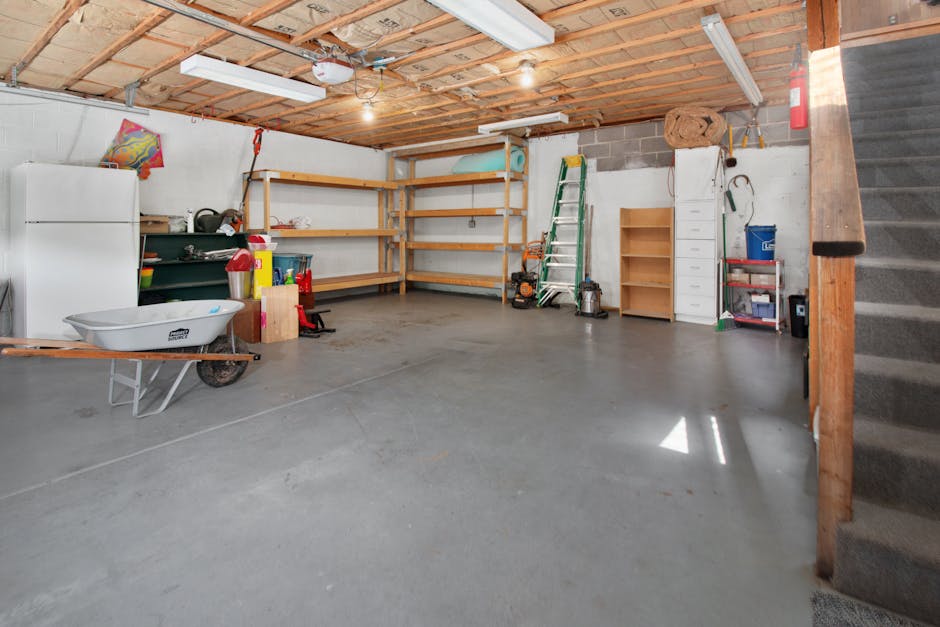
Consider a typical suburban garage: one wall of shelving, a few old suitcases, a broken lawnmower, three boxes of miscellaneous cables, two plastic storage units, and a couple of bulky items that have been "temporarily" parked there for years. At first glance, it feels manageable. In reality, the owner discovers that the heavy items are awkward to move, the old paint tins need checking, and the amount of mixed waste is larger than expected.
A DIY attempt might still work if the person has time, a helper, and a vehicle. But once the awkward items appear, the job changes shape. What looked like a one-day tidy-up becomes repeated lifting, sorting, disposal planning, and a lot of running around.
In that scenario, a specialist garage clearance is often the calmer option. The owner can keep the valuable tools, give away usable items, and leave the rest to a team that knows how to remove bulky waste efficiently. The result is not just an empty garage. It is a garage that is actually usable again.
That is the difference in practice: DIY gives you full control, but specialists reduce friction at the exact point the job gets difficult.
Practical Checklist
Use this checklist before you decide whether to do it yourself or call specialists.
- Have I checked the full size of the job, not just the visible clutter?
- Are there heavy, fragile, or awkward items?
- Do I know where each type of item should go?
- Is there anything that may need special handling?
- Do I have enough time to finish properly?
- Can I move items safely without damaging the property?
- Do I have the right tools, transport, and help?
- Would a hybrid approach save time and effort?
- Do I need the garage cleared for a deadline?
- Would specialist support make the process safer or easier?
Quick decision rule: if the garage is light, tidy, and predictable, DIY can work. If it is heavy, mixed, urgent, or awkward, call specialists.
Conclusion
The choice between DIY and a professional garage clear-out is usually not about pride. It is about practicality. If you have a small, straightforward space and the time to do it properly, a DIY clear-out can be perfectly sensible. If the garage is full of heavy, awkward, or mixed items, or if you need the space back quickly, specialists are often the better option.
The smartest approach is to judge the job honestly. Count the time, the lifting, the disposal effort, and the stress factor. If any of those start to feel disproportionate, bring in help before the project snowballs.
And if you are already tackling clutter elsewhere in the property, it can help to align the garage clear-out with your wider maintenance plan. That way, the work feels coordinated rather than endless.
Get a free quote today and see how much you can save.
Frequently Asked Questions
How do I know if my garage clear-out is too big for DIY?
If the garage contains a large volume of clutter, heavy items, awkward access, or materials you are unsure how to dispose of, it is probably beyond an easy DIY job. A good rule is to ask whether you can safely finish it in one or two focused sessions. If not, specialists may be the better route.
Is a professional garage clearance worth it?
Often, yes. It can save time, reduce lifting, and simplify disposal. The value is especially clear when you are dealing with bulky waste, a tight schedule, or limited transport. The cheapest option is not always the best value once labour and repeat trips are added up.
What items are hardest to clear from a garage?
Common troublemakers include old furniture, white goods, broken shelving, tyres, boxes of mixed junk, paint tins, and anything awkwardly shaped or very heavy. Items like these are the ones most likely to turn a DIY job into a long slog.
Can I just take everything to the tip myself?
Sometimes, but it depends on the volume, your vehicle, and what the local site accepts. Multiple trips can eat up a lot of time, and not every item is straightforward. If the garage is packed, a specialist collection can be simpler.
What is the best way to sort a garage before clearing it?
Use a simple system: keep, donate, recycle, dispose, and specialist-handling items. Start with the obvious rubbish, then move to larger items, then tackle the uncertain boxes. Sorting before lifting saves time and reduces mistakes.
Should I hire a van for a DIY garage clear-out?
If you have bulky items or lots of waste, a van may be necessary. But once you add hire costs, fuel, loading time, and disposal trips, the DIY savings can shrink quickly. Compare the total effort, not just the hire price.
Do garage clearance specialists handle recycling?
Many do, but the approach varies by provider. It is sensible to ask how they separate reusable, recyclable, and general waste. A reputable company should be able to explain its process clearly.
How long does a garage clear-out usually take?
A small DIY clear-out may take a few hours. A larger one can stretch into a full weekend or longer, especially if sorting is involved. A professional team can often complete the job much faster, depending on access and volume.
What should I avoid throwing away without checking?
Be cautious with paint, oils, fuel containers, chemicals, batteries, and electrical items. If you are unsure, do not mix them in with general waste. Check guidance first or ask a specialist how they handle those items.
Is a hybrid approach a good compromise?
Yes, often it is the most sensible option. You can sort valuable or sentimental items yourself, then call specialists for the heavy, bulky, or hard-to-dispose-of waste. That keeps control in your hands while taking pressure off the difficult part.
Can garage clear-out services help if access is awkward?
Yes, that is exactly where many specialist teams earn their keep. Narrow side access, steps, uneven driveways, and tight parking can make DIY difficult. Experienced crews are usually used to working around access challenges safely.
How do I choose a trustworthy clearance provider?
Look for clear service information, transparent pricing, safety and insurance details, and sensible policies. Pages such as about us, pricing and quotes, and contact details are good signs that a provider is easy to assess before you book.