Rapid Response: Same-Day Rubbish Removal Best Practices
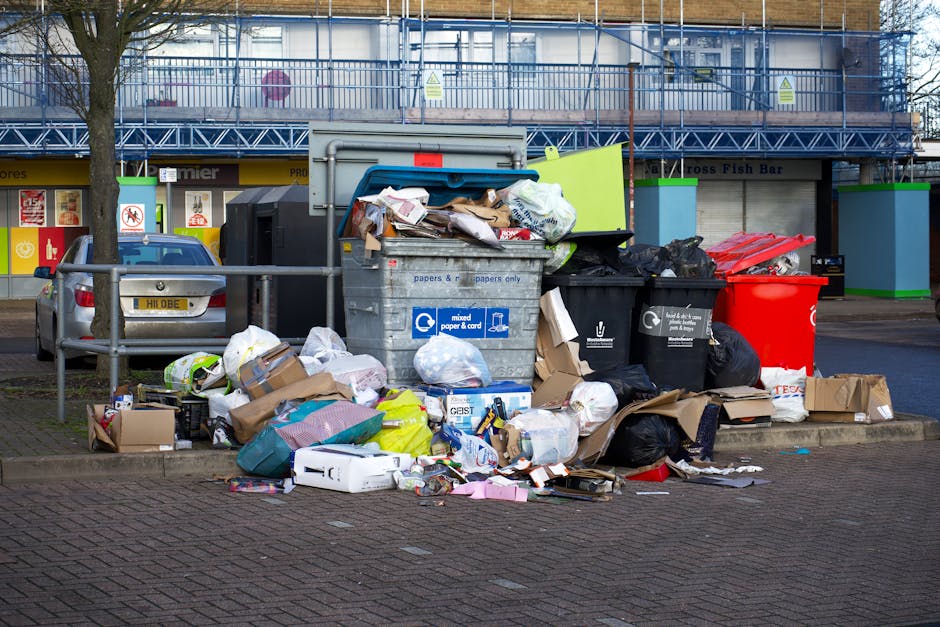
When rubbish needs to go today, not tomorrow, the pressure is real. A blocked hallway, a pile of builders' waste, an overflowing office store room, or a landlord handover gone a bit sideways can't always wait for the usual schedule. That is where Rapid Response: Same-Day Rubbish Removal Best Practices comes in: a practical, organised approach to getting waste cleared quickly without creating mess, delays, or avoidable risk.
Truth be told, fast removal is not just about speed. Done properly, it protects access routes, keeps people safe, avoids extra handling, and helps you make a clean decision when time is short. In this guide, we'll walk through how same-day rubbish removal should work, who it suits, what to ask before booking, and the little details that separate a smooth job from a stressful one. If you only remember one thing, remember this: fast is good, controlled is better.
To make this easier to scan, here's a quick map of what we'll cover.
- Why same-day rubbish removal matters
- How the process works
- Key benefits and practical advantages
- Who it's for and when it makes sense
- Step-by-step guidance
- Expert tips for better results
- Common mistakes to avoid
- Tools, resources and recommendations
- Law, compliance and best practice
- Options and comparison table
- Real-world example
- Practical checklist
- Conclusion
- Frequently asked questions
Why Rapid Response: Same-Day Rubbish Removal Best Practices Matters
Same-day rubbish removal matters because waste has a habit of turning small problems into bigger ones. A mattress left in a hallway becomes a fire escape issue. A broken wardrobe in a flat can block access to storage or a boiler. Builders' rubble sitting in a front garden makes the place look half-finished and, in some cases, unsafe. In busy parts of London, where space is tight and people are always moving through shared access routes, those issues show up quickly.
There's also the time factor. If you're clearing a property for a sale, dealing with a move-out, trying to reopen a workspace, or just making room to function again, delay costs more than most people expect. Not always in cash. Sometimes it's stress, missed deadlines, strained neighbours, or a loss of momentum. And momentum matters.
One thing that's easy to underestimate is decision fatigue. When rubbish is all around you, it becomes harder to sort, harder to plan, and harder to see what you're dealing with. A rapid response service works best when it restores order quickly enough that you can breathe again. Sounds simple. It is, in principle. In practice, it takes a bit of coordination.
Expert summary: the best same-day rubbish removal is not the one that arrives first; it's the one that arrives prepared, gives a clear plan, handles the load safely, and leaves the space genuinely usable again.
How Rapid Response: Same-Day Rubbish Removal Best Practices Works
Most same-day rubbish removal jobs follow a straightforward sequence, but the quality of each step makes a big difference. A good provider will usually start with a quick assessment of the rubbish type, access, volume, and urgency. That might happen over the phone, by photos, or through a short message exchange. The goal is to avoid surprises when the team arrives.
Next comes scheduling. For same-day work, the time window is often tight, so clear instructions help. Is the waste inside or outside? Is there a lift? Are there stairs, parking restrictions, narrow paths, or shared entrances? Small details like these can shave minutes off a job or add half an hour of faff. And if you know London, you know that half an hour can disappear very quickly.
On arrival, the team should confirm what is being taken, check for restricted items, and plan the safest lifting route. Then comes sorting and removal. Reusable items, recyclable materials, and general waste may be separated where appropriate, and the load is taken away for lawful disposal, reuse, or recycling depending on the provider's setup. If the crew is efficient, the space is cleared with minimal disruption. You notice the silence after the last item goes. Nice little moment, that.
Good same-day operations also include a final sweep. Not a deep clean, but a sensible tidy-up: loose bits removed, obvious debris picked up, and access left safer than before. That last part often gets overlooked, yet it's what makes the service feel complete.
Key Benefits and Practical Advantages
The obvious benefit is speed. But speed alone is not the full story.
1. Faster return to normal
If your home, office, shop, or rented property is crowded with junk, same-day service gets your space back into use quickly. That matters for move-ins, move-outs, deliveries, inspections, and day-to-day living.
2. Lower safety risk
Loose timber, glass, old appliances, broken furniture, and heavy bags can all create trip hazards. Prompt removal reduces the chance of someone getting hurt or damage spreading further.
3. Less disruption for neighbours or staff
A fast, planned clearance limits noise, blocked walkways, and the awkward "we'll deal with it later" pile that tends to attract complaints. In flats and shared buildings, that can be a relief for everyone involved.
4. Better decision-making under pressure
When the rubbish is gone, you can think clearly. Maybe you only needed half the items removed after all. Or maybe the room layout now makes sense. Either way, the pressure drops.
5. Useful for urgent operational issues
Businesses often need immediate clearance after deliveries, refurb work, stockroom reorganisation, or a sudden clean-down. A same-day team can help prevent a small bottleneck from becoming a full shutdown.
6. More efficient than trying to do it yourself in a rush
To be fair, people often underestimate how long loading, lifting, sorting, and disposing takes. One van trip turns into three. A staircase becomes a nuisance. Your afternoon disappears. A proper rapid-response crew is built to handle that pacing.
Who This Is For and When It Makes Sense
Same-day rubbish removal is a good fit for anyone dealing with time-sensitive waste, but it is especially useful in a few recurring situations.
Homeowners and tenants often need fast help after furniture replacement, end-of-tenancy clear-outs, or unexpected clutter that has finally become too much. If you've ever looked at a spare room and thought, "Right, this has got out of hand," you're not alone.
Landlords and letting agents use rapid clearance between occupants, especially when a property needs to be turned around quickly for cleaning, repair, or viewing. A few bulky items left behind can slow everything down.
Office managers and small businesses may need quick waste removal after a clear-out, refit, archive purge, or equipment upgrade. Offices accumulate odd things: broken chairs, tangled cables, old printers, half-empty boxes, all sorts.
Tradespeople and builders can benefit from prompt builders' waste clearance where a site needs to stay safe and functional. If rubble starts stacking up, the job can feel messy very quickly.
People dealing with one-off bulky items such as mattresses, sofas, fridges, or awkward mixed loads often find same-day service simpler than trying to coordinate council collection slots or transport on their own. For bulky household items, options like large item collection or bulky waste collection can be a sensible route depending on what needs shifting.
It also makes sense when you're working to a deadline. End of lease tomorrow? Inspection in the morning? Builders coming back at 8 a.m.? Then the question is not whether it's convenient. It's whether you can afford the delay.
Step-by-Step Guidance
If you want same-day rubbish removal to go smoothly, a little preparation goes a long way. Here's the practical flow we'd suggest.
- Identify exactly what needs removing. Separate general rubbish from reusable items, electricals, bulky furniture, garden waste, or building debris. Don't worry if it's mixed, but do know what you've got.
- Take a quick look at access. Check whether items must come down stairs, through a rear alley, across a garden, or from a top-floor flat. Access is often the thing that changes the job most.
- Send clear photos if requested. A few decent pictures from different angles help the provider estimate labour, vehicle size, and timing. One blurry photo of a sofa half-hidden behind a plant usually doesn't help much.
- Ask what is included. Confirm whether lifting from inside, loading, sweeping, and disposal are part of the service. If not, you want to know before the team arrives.
- Check for restricted items. Some things need special handling, especially fridges, mattresses, hazardous materials, or certain electrical items. A good provider will explain this clearly.
- Prepare the space. Clear a path, open gates, move cars if needed, and keep pets or children away from the work area. Small step, big difference.
- Confirm timing and contact details. Same-day work is about coordination. If the crew can't reach you, the slot may slip, and nobody wants that.
- Do a final walk-through. Once the rubbish is removed, check nothing important got bundled in by mistake. It happens. Not often, but often enough to mention it.
A simple example: if you're clearing a flat in Balham after a furniture upgrade, and there's a broken wardrobe, two mattresses, and assorted packaging, the best outcome is usually achieved when you group the items, take photos, and make sure the stairway is clear before the truck turns up. Small prep, less hassle.
Expert Tips for Better Results
Here's where the job becomes smoother, cheaper in effort, and less frantic.
Be honest about volume. Understating what needs removing is one of the fastest ways to lose time. If you think there may be extra bags in the loft, say so. If the garage is worse than the hallway, mention that too. Surprises at the kerb are no one's favourite thing.
Group by type where possible. Even if the provider handles mixed waste, grouping similar items helps on site. Sofas together. Cardboard together. Garden cuttings together. You'll notice the crew moving more efficiently because the load plan becomes obvious.
Think about parking early. In busy streets, parking can be the hidden bottleneck. If a van cannot stop nearby, the whole process slows down. That's true in central areas and residential roads alike.
Ask about recycling routes. A respectable provider should be able to explain what happens to your waste after collection. Not every item can be reused, of course, but a sensible sorting process is a good sign.
Keep valuables out of the work zone. It sounds obvious, yet people often forget documents, chargers, jewellery, keys, or small electronics when things are moving quickly. Better to set a clear "do not remove" area before the work starts.
Use urgency wisely. If the job is truly time-sensitive, prioritise what must go today and what can wait. You do not need to solve the whole house in one go. Sometimes the smartest move is to clear the access point first, then the rest.
And a little human truth: the moment when a cluttered room suddenly becomes walkable again can feel oddly emotional. Not dramatic, just quietly relieving. That's a real benefit, even if it doesn't show up on an invoice.
Common Mistakes to Avoid
Fast jobs are where avoidable mistakes show up most clearly. The good news? Most of them are simple to prevent.
- Booking without checking access. Stairs, basement entries, narrow hallways, and parking restrictions all affect timing.
- Assuming every item can go together. Some loads need special handling, especially electricals and heavy appliances.
- Leaving sorting until the team arrives. This can slow things down a lot, especially if the room is packed wall to wall.
- Not asking about disposal methods. Good practice matters, even on a rushed job.
- Forgetting shared-property etiquette. In flats and offices, neighbours or colleagues may be affected by noise, loading, or access.
- Choosing on speed alone. Speed is useful. Reliability is better. Speed without care is just chaos with a clock on it.
One more thing: don't leave important paperwork, keys, or personal items mixed in with waste. It happens more than people admit. The bag looked empty. Then it wasn't. Bit annoying, that.
Tools, Resources and Recommendations
You do not need much equipment for a same-day clearance, but the right basics can make the process far easier.
Smartphone photos are one of the most useful tools. Good pictures help estimate volume and access. Take them from the doorway, from the side, and close up where item type matters.
Heavy-duty gloves are sensible if you're moving anything yourself before the crew arrives. Even "harmless" clutter can have sharp edges, dust, or splinters.
Clear bags or stackable containers help if you're separating lightweight waste or small bits and pieces. That's useful in lofts, garages, and office storage rooms.
Basic labels or notes can save confusion. A sticky note on items that must stay, or on boxes you want removed first, makes life easier for everyone.
Property access notes are underrated. If the entrance code, buzzer name, loading bay rules, or parking situation is awkward, write it down before the team arrives. Nothing fancy. Just practical.
When deciding between services, it can help to review pages like pricing and quotes, insurance and safety, and recycling and sustainability. Those pages are useful because same-day work is not just a logistics question; it's also about peace of mind and how the waste is handled after collection.
If you need a more general service overview, rubbish removal, waste removal, and waste clearance can help you compare the broader options without overcomplicating things.
Law, Compliance, Standards, or Best Practice
For rubbish removal, compliance is about doing things properly and avoiding shortcuts that could create problems later. In the UK, households and businesses have different responsibilities depending on the type of waste, the location, and how it is being handled. You do not need to become an expert overnight, but you should know a few sensible principles.
Use a provider that handles waste responsibly. Waste should be transported and disposed of through lawful routes, with care around materials that need separate handling. If a company cannot explain where waste goes in plain English, that's a warning sign.
Keep special items separate where needed. Fridges, mattresses, sofas, white goods, and electrical items often need more careful processing than mixed household rubbish. For example, appliance disposal may be easier through specific services such as fridge disposal or white goods recycle if that matches your load.
Mind duty of care basics for businesses. If you run a company, you generally need to be confident that your waste is being handled by a legitimate operator. That means keeping records, asking sensible questions, and not treating the skip-or-van choice as an afterthought.
Follow site safety expectations. The practical side matters too: keep access routes clear, avoid overloading bags, and don't ask crews to lift items that have obvious hazards hidden inside. Broken glass in a black sack, for example, is not a fun surprise for anybody.
For business settings, pages like business waste removal and office clearance are useful starting points. For home-based projects, you may also want to look at home clearance, house clearance, or flat clearance depending on the property type.
If the job involves bulky furniture, the relevant service might be furniture clearance, sofa removal, mattress disposal, or bed disposal. Matching the service to the waste type is a small detail that saves a lot of noise later on.
Options, Methods, or Comparison Table
Not every urgent waste situation calls for the same solution. Sometimes you need a full same-day pickup. Sometimes a targeted bulky-item service does the job better. Sometimes you can wait a bit and save yourself a rush fee or extra labour. Here's a simple comparison.
| Option | Best for | Strengths | Limitations |
|---|---|---|---|
| Same-day rubbish removal | Urgent mixed waste, access problems, deadlines | Fast turnaround, flexible, minimal delay | Availability can be tight, needs clear prep |
| Bulky-item collection | One or two large items like sofas or mattresses | Simple, efficient for large pieces | Less suited to mixed loads |
| Builders' waste clearance | DIY jobs, refurb work, renovation debris | Good for rubble, timber, and site waste | May not cover household clutter |
| Council collection | Lower-urgency items where timing is flexible | Useful in some cases, straightforward for residents | Often slower and less flexible for urgent needs |
| Full property clearance | Homes, flats, lofts, garages, probate, end-of-tenancy | Thorough, suitable for larger clear-outs | May be more than you need for a small load |
As a rule of thumb, choose the lightest service that still solves the real problem. If it's one sofa and a mattress, there's no need to overthink it. If it's mixed rubbish in a tight flat before a handover, then rapid-response clearance is probably the right tool.
Case Study or Real-World Example
A common real-world scenario goes like this. A tenant is moving out of a second-floor flat on a Friday afternoon, and the remaining items are a broken chest of drawers, an old sofa, some packaging, and a few bags of mixed household waste. The landlord wants the place ready for cleaning on Saturday morning. The stairwell is narrow, the street has limited parking, and the lift is out of service. Not ideal.
What makes the difference here is preparation. The tenant sends photos before booking, confirms the access route, and moves personal items aside. The provider arrives with enough crew to handle the stairs safely. The sofa goes first because it is the most awkward. Bags are then moved in a sensible order, and the final sweep clears loose debris from the hallway. No drama. Just efficient work.
In another example, a small retail shop in central London needs same-day clearance after a damaged delivery leaves broken packaging, empty pallets, and a few unusable display items in the back stockroom. The stockroom is not huge, but it is blocking new deliveries. By clearing the waste the same day, the business avoids a second day of disruption. That's the thing with urgent waste: the cost is often in the delay, not the load itself.
These jobs aren't glamorous. Let's be honest, rubbish rarely is. But a calm, tidy handover can make a huge difference to the next 24 hours.
Practical Checklist
Use this before you book a same-day collection, or at least before the team arrives.
- Identify the main waste types: general rubbish, furniture, electricals, garden waste, builders' waste, or mixed items.
- Take clear photos from a few angles.
- Check access: stairs, lift, parking, gates, alleyways, and loading space.
- Confirm the items are safe to move and nothing sensitive is mixed in.
- Set aside anything you want to keep.
- Ask whether lifting, loading, and disposal are included.
- Check if any items need special handling.
- Make sure pets, children, staff, or residents are out of the way.
- Keep entry instructions, buzz codes, or parking notes ready.
- Do a final walk-through after removal.
If you're dealing with a garden pile-up, garden clearance may be the cleaner fit. For garage clutter, garage clearance is often the right call. And if the whole property needs a reset, loft clearance or broader waste collection may be more appropriate than a one-off pickup.
Get a free quote today and see how much you can save.
Conclusion
Rapid-response rubbish removal works best when speed is paired with preparation, clear communication, and sensible handling from start to finish. The goal is not just to make the rubbish disappear. It's to restore space, safety, and a sense of control without creating a second problem in the process. That's the real win.
If you plan ahead by checking access, describing the load honestly, and choosing the right service type, same-day removal can feel surprisingly smooth. A messy space becomes manageable again. A deadline stops feeling like a looming wall. And the day, thankfully, gets a bit lighter.
Sometimes that's all people need: one clean decision, one clear space, and a proper fresh start.
Frequently Asked Questions
What counts as same-day rubbish removal?
Same-day rubbish removal usually means the waste is collected on the same day you request the service, subject to availability, access, and the type of rubbish. It's most useful when timing matters and you can't wait for a later slot.
How do I prepare for a rapid-response collection?
Take photos, identify the waste type, clear a path to the items, and make sure access details are ready. If the crew can get in and load without delays, the whole process is smoother. Simple, but it works.
Can mixed rubbish be collected on the same day?
Yes, in many cases mixed rubbish can be removed the same day. The key is telling the provider what's included so they can bring the right crew and vehicle. Mixed loads are common in homes, flats, and office clear-outs.
Is same-day rubbish removal more expensive than standard collection?
It can be, because urgent work may need faster scheduling or extra labour. That said, the real value is often in avoiding delay, missed deadlines, or extra disruption. It's worth comparing options rather than assuming.
What items need special handling?
Items such as fridges, white goods, mattresses, some electricals, and certain bulky materials may need separate handling or different disposal routes. If you're unsure, ask before booking. Better that than a surprise on the day.
Can I book same-day rubbish removal for a flat?
Yes, and flats are one of the most common use cases. Just be clear about stairs, lifts, parking, and whether the waste is inside the property or already outside. Access details really matter in flats.
What's the difference between rubbish removal and waste clearance?
People often use the terms interchangeably. In practice, rubbish removal tends to mean fast collection of unwanted waste, while waste clearance may cover larger or more organised clear-outs. The exact wording matters less than the service scope.
How can I tell if a provider is reliable?
Look for clear communication, straightforward pricing, proper safety practices, and a sensible explanation of what happens to your waste. If someone is vague about the basics, that's usually not a great sign.
What should I do with items I want to keep?
Move keepers out of the work area before the team arrives and label anything that must not be taken. When jobs are rushed, a clear "keep" zone is one of the easiest ways to avoid mistakes.
Does same-day removal include loading from inside the property?
Often yes, but not always, so you should confirm this in advance. Some services include lifting and loading from inside, while others may only collect from an agreed external point. Ask directly to avoid confusion.
What if I only need one bulky item removed?
For a single item, a dedicated bulky-item service may be more efficient than a broader clearance. For example, sofa, mattress, or large-item collection can be a better fit if the load is small but awkward.
How soon should I book if I need same-day collection?
As soon as possible. Same-day slots depend on route planning and crew availability, so earlier contact gives you a better chance of getting the time you need. If your job is urgent, don't leave it until the last minute if you can help it.